Extruder and feeding
Single-screw extruder with 30:1 L/D and six-stage independent PID temperature control.
Production line
A 3D printing filament production line turns polymer pellets into finished filament spools in one continuous process: material feeding, extrusion, cooling and sizing, in-line diameter measurement, servo traction and automatic winding. The line is specified around the material, filament diameter, target output and the spool the plant packs.
Process
Raw material feeding into the extruder
Melting and extrusion with six-stage PID temperature control
Hot-water and cold-water cooling and sizing
In-line dual-axis laser diameter measurement
Servo traction holding line speed
Automatic winding with the filament end secured
Quality
Configuration
Next step
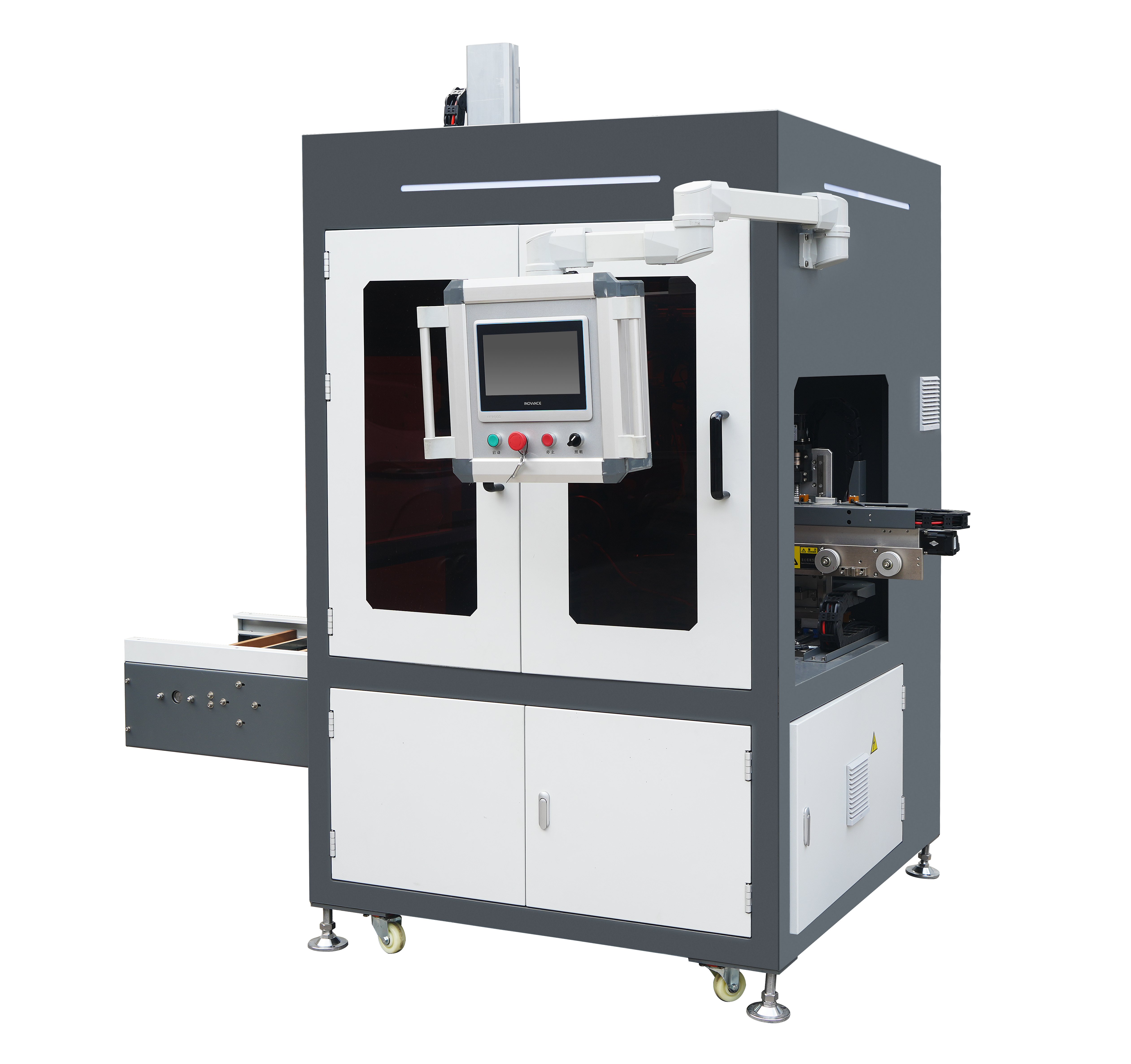
Tape Fixing Type
Automatic winding station that spools finished filament under controlled tension and fixes the filament end to the spool with tape, so the spool leaves the line ready for packing without manual handling.

High-Speed
The RC-50 High-Speed 3D Filament Extrusion Line is a fully servo-controlled 3D printer filament production line designed to process materials such as PETG, ABS, PLA and PLA+ pellets into wound filament spools. It combines a 30:1 single-screw extruder with in-line laser diameter measurement, servo traction and automatic winding to support integrated filament production with reduced manual spool handling.
Threading Hole Type
Automatic winding station that spools finished filament under controlled tension and locks the filament head and tail through holes in the spool core, so the spool leaves the line secure and tape-free without manual handling.
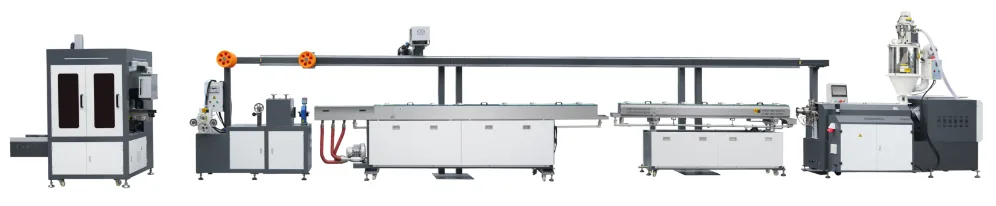
Standard-Speed
The RC-45 Standard-Speed 3D Filament Extrusion Line is a 3D printer filament production line for materials such as PLA, PLA+, PETG and ABS. It integrates extrusion, cooling, in-line diameter measurement, traction and automatic winding, with configuration options to match production targets, filament diameter and spool requirements.
FAQ
Pellets are fed into a single-screw extruder, melted under six-stage PID control and pushed through a die. The strand passes hot-water and cold-water cooling stages, is measured in line by a dual-axis laser, pulled by servo traction and spooled automatically.
Feeding and extrusion, cooling and sizing, in-line diameter measurement, traction and automatic winding. The exact arrangement is agreed per project once material, diameter and output are known.
Diameter is read in line and corrected through temperature, screw speed, cooling and traction speed. Winding quality is held by servo tension control and by securing the filament end automatically at the end of each cycle.
Share the material, filament diameter, target output and spool specification. Rongcai reviews the configuration and prepares a quotation.