Automatic Filament Winding: Tension, Spooling and Filament End Fixing
Two settings decide how a spool leaves the line: the tension the filament is wound under, and how the filament end is fixed. This guide compares tape fixing with threading hole fixing and lists the spool details a winding machine is specified around.
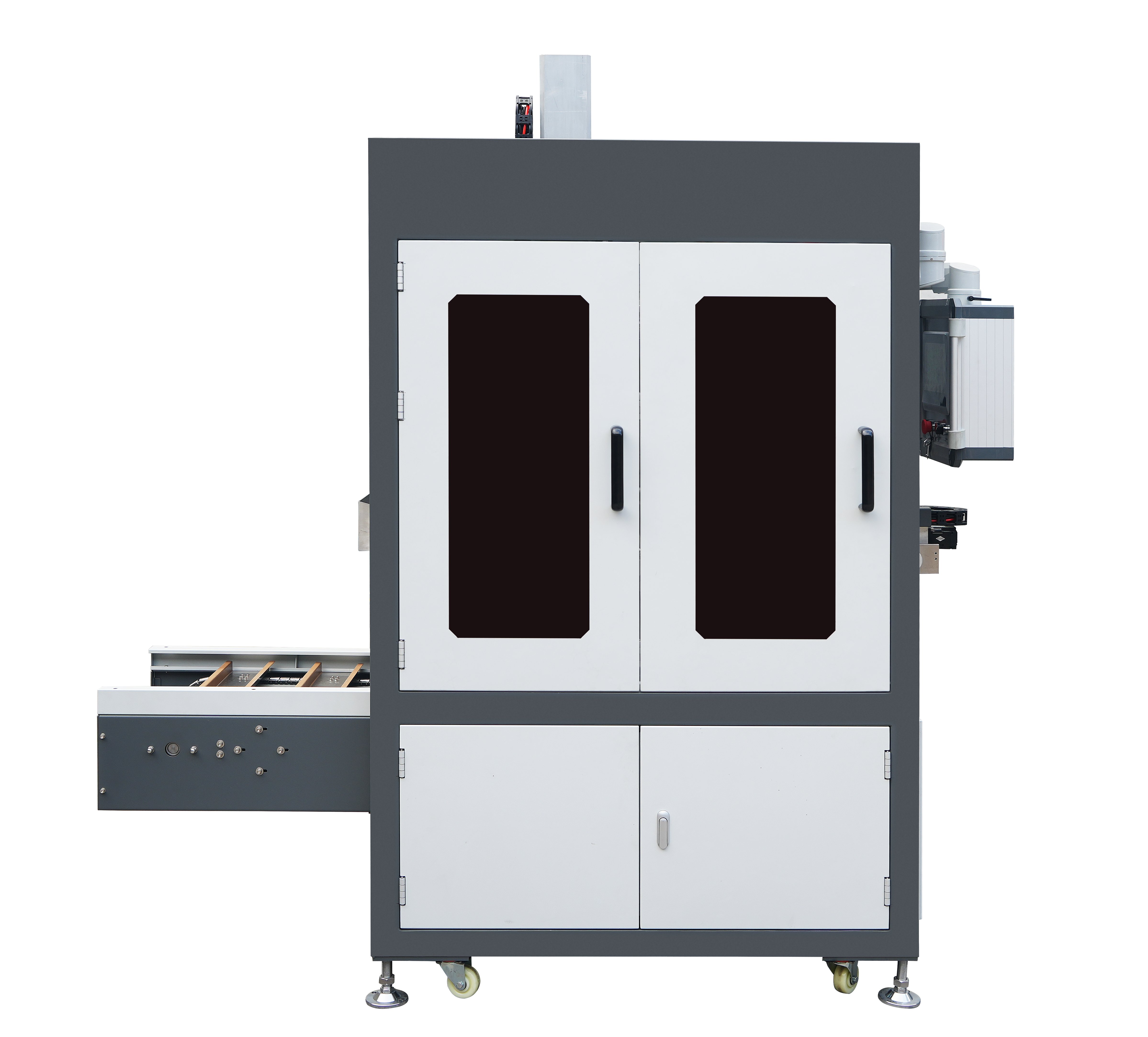
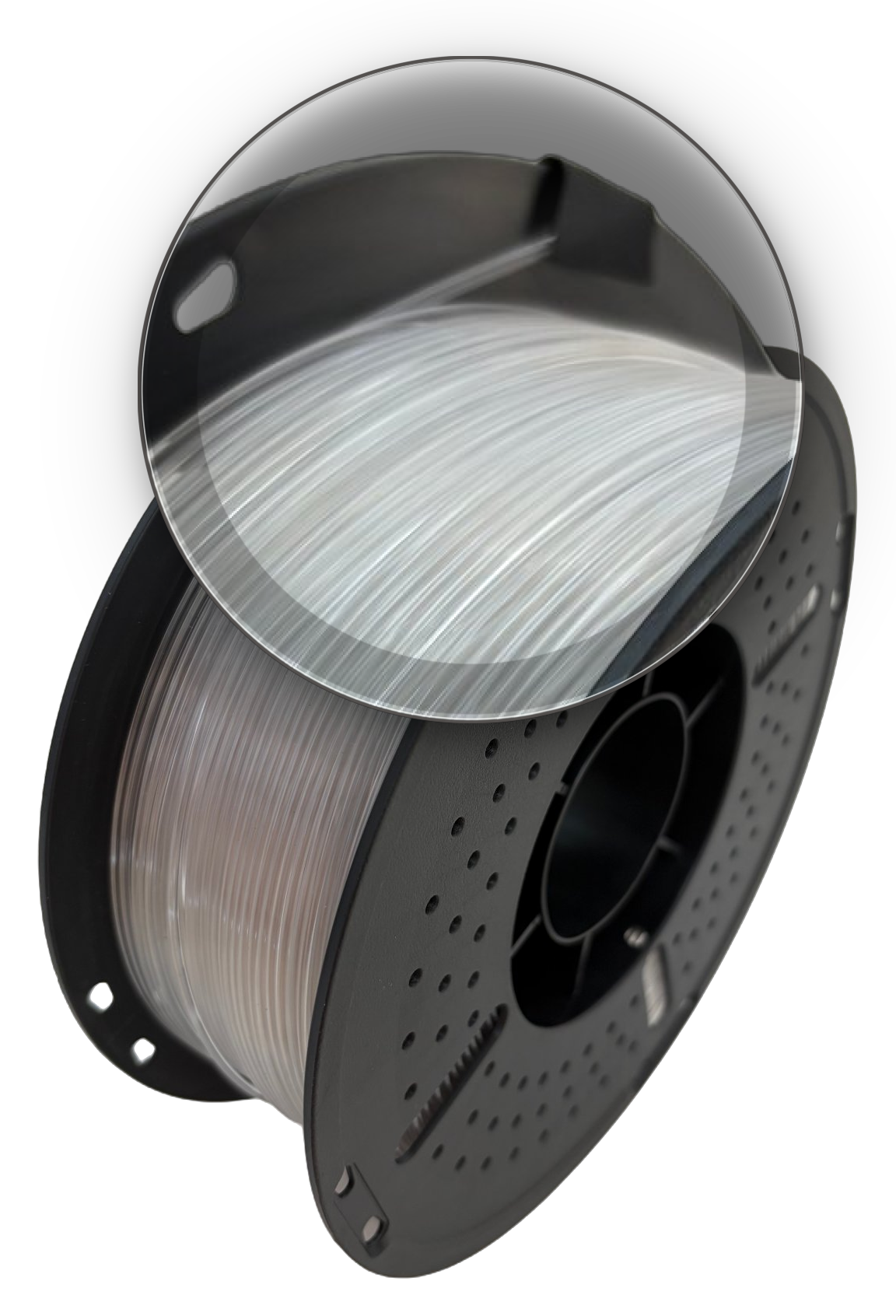
Winding is the last stage of the line and the first thing a customer sees when the box is opened. An automatic filament winding machine holds the two settings that decide how a spool leaves the line: the tension the filament is spooled under, and how the filament end is fixed to the spool.
Why winding tension matters more than it looks
Filament wound under too little tension traps slack layers that can shift during transport and jam on the printer. Filament wound under too much tension compresses the inner layers, which shows up as flattened spool edges and as a spool that relaxes after packing. Automatic filament spool winding holds a set tension through the whole spool instead of relying on an operator to feel it, which is the main reason spool-to-spool consistency improves when this stage is automated.
Two ways of fixing the filament end
- Tape fixing. The tape fixing winding machine feeds, cuts and applies the tape in one automatic motion at the start of each wind, fixing the filament end to the outer wrap at an adjustable length and paste position. It works with standard paper or plastic spools and needs no special core preparation, but it leaves a taped point on the spool surface.
- Threading hole fixing. The threading hole winding machine locks the filament head through the positioning hole at the front of the spool core and, when the set length is reached, threads the tail into the rear hole. The spool surface stays clean with no tape, but the spool must be supplied with through holes in the positions the machine expects.
Which one fits a plant is not a quality question. It follows the spool format the plant already buys and what the packing process accepts, so it belongs in the requirement rather than being chosen after delivery.
The two automatic winding machines side by side
| Documented specification | Tape fixing winding machine | Threading hole winding machine |
|---|---|---|
| Winding speed | Up to 200 m/min, ±0.1% line speed accuracy | Up to 120 m/min, ±0.1% line speed accuracy |
| Pairs with extrusion lines up to | 37 kg/h output | 25 kg/h output |
| Spool core inner diameter | φ52–56 mm | φ53–58 mm |
| Maximum wound outer diameter | φ200 mm | φ200 mm |
| Typical spool weight | Approx. 1 kg | Approx. 1 kg |
| Filament end fixing | Tape; length and paste position adjustable | Head and tail locked through front and rear holes |
Both machines run automatic roll change, stop themselves on filament break detected by photoelectric and proximity sensors, wind to a fixed length and log output statistics. Traverse on both is a servo screw or cam that keeps the roll face flat and even.
What the threading-hole spool must look like
Threading-hole fixing only works when the spool is made for it. The documented spool requirements are:
- Core inner diameter 53–58 mm; maximum wound outside diameter 200 mm.
- Threading holes at least 3 mm in diameter with an opening of at least 5 mm, spaced 35 mm or more apart, passing through the core wall.
- Spool width 160–200 mm with a flange width of 60–70 mm.
- No blind holes: spools whose inner wall has no holes, or whose holes do not pass through the wall, are not suitable.
Tape fixing is the more forgiving route on spool format, which is one reason plants with mixed or standard spool stocks often specify it.
Standalone unit or part of the line
Either machine can be supplied as a standalone unit for a plant that already runs extrusion, or as the final section of a complete line. The tape fixing type is the winding configuration of the RC-50 high-speed filament extrusion line, and the threading hole type is the standard configuration of the RC-45 standard-speed filament extrusion line; the RC-45 is also available in a tape-fixing configuration. The filament extrusion line comparison page sets the two lines side by side.
Items to settle before ordering a winding machine
- Spool core diameter, width, flange width and maximum wound outside diameter, plus the spool material.
- Filament end fixing: tape fixing or threading hole — and, for threading hole, the hole diameter, opening width and spacing.
- Filament diameter and material being wound. Both machines wind φ1.75 mm filament with a ±0.03 mm tolerance.
- Line speed the winding station has to keep up with, so it does not become the slowest point on the line.
- Whether production data should reach an MES: both machines communicate over RS485 and Ethernet with Modbus TCP/RTU.
- Site power (3-phase 380 V / 50 Hz) and compressed air supply, plus floor space for the machine's footprint and weight.
Frequently asked questions
Can a winding machine be added to an existing extrusion line?
In most cases yes, and the deciding factors are the line speed the winding station has to match, the height at which filament arrives from the existing line, and the spool format. Those three items are what the machine is specified around.
Does automatic winding change the filament itself?
No. The filament diameter was set earlier in the line. Winding changes how the filament sits on the spool and how the end is fixed, not the filament itself.
How is winding tension verified?
By checking finished spools for flattened edges, trapped slack layers and consistent outer diameter. Where the line records tension, that record is compared against those spool checks rather than used on its own.
Which spool formats work with the threading-hole winder?
Spools with a 53–58 mm core, through holes of at least 3 mm diameter (opening 5 mm or wider) spaced 35 mm or more apart, a width of 160–200 mm and a 60–70 mm flange. Send the spool drawing or a photo of the core so the configuration can be confirmed before ordering.
Next step
Send the spool core and outer diameter you use, the filament diameter and the line speed, and we will confirm the winding configuration. Request a quote to start that review.
Talk to Rongcai about your line
Send the material, filament diameter, target output and spool specification you work with, and Rongcai reviews a matching configuration.