How 3D Printing Filament Is Made: The Extrusion Process Explained
Filament is made by melting pellets, forming a strand, cooling it to a fixed diameter, measuring that diameter in line and winding the finished filament onto a spool. This guide follows the five stages and shows which one decides which property of the finished spool.
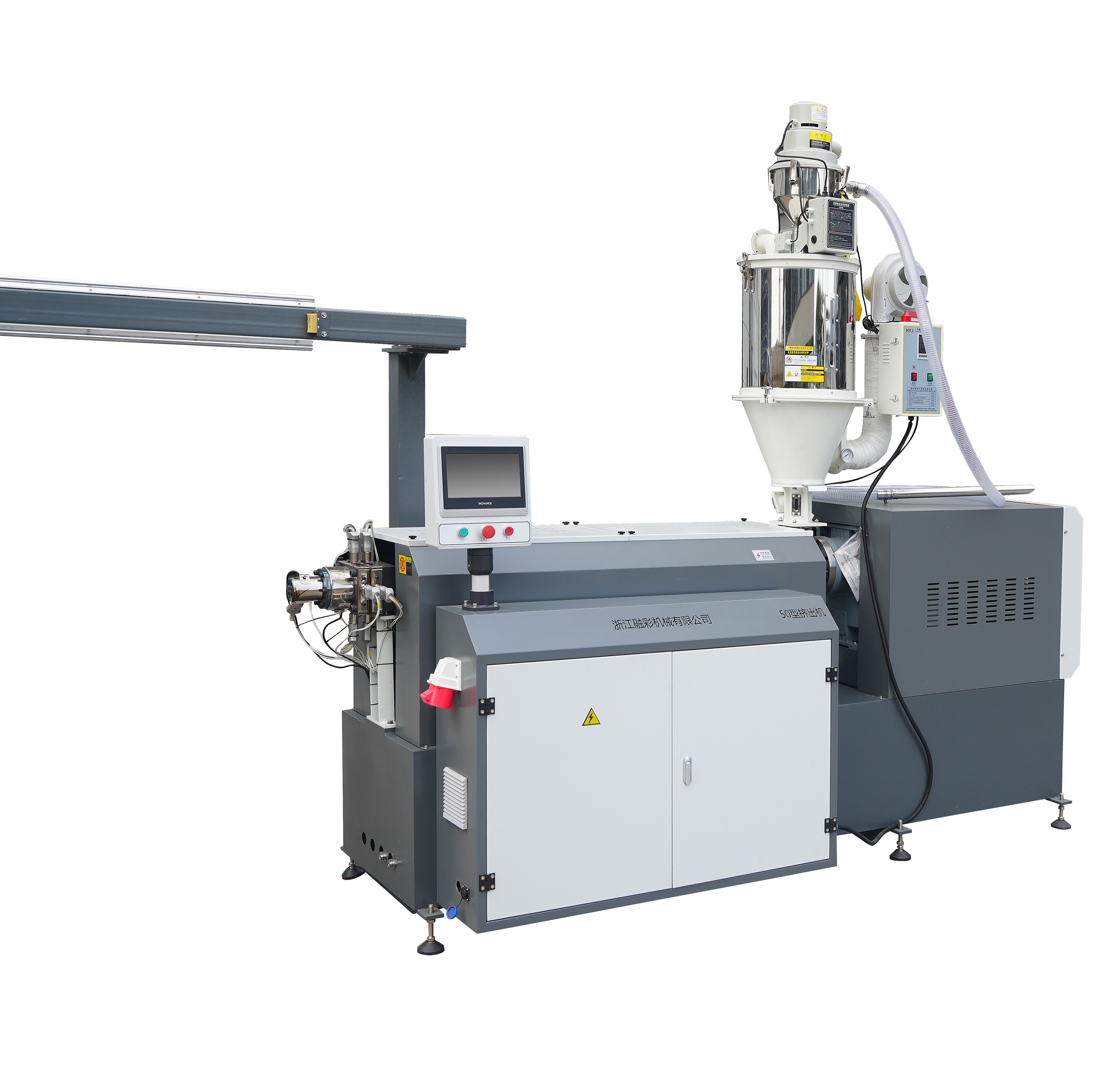
3D printing filament is made by melting polymer pellets in an extruder, forming the melt into a strand, cooling that strand until it holds a fixed diameter, checking the diameter continuously, and winding the finished filament onto a spool. The extruder is only one part of that chain. The cooling, measuring and winding sections decide whether the spool you ship matches the tolerance you sold.
The five stages of a filament production line
| Stage | What it does | What it decides |
|---|---|---|
| Extrusion | Feeds pellets into a heated screw, melts them and pumps the melt through a die | Melt quality and output per hour |
| Cooling and sizing | Solidifies the strand in a controlled water bath and sets the round cross section | Final diameter and ovality |
| Diameter control | Measures the strand continuously and corrects the line | Tolerance band across the spool |
| Traction | Pulls the strand at constant speed with a servo drive | Stable draw-down without surging |
| Automatic winding | Spools the filament under controlled tension and fixes the filament end | Spool presentation and packing cost |
Extrusion: pellets to a formed strand
A single-screw extruder with a length-to-diameter ratio around 30:1 gives the polymer enough residence time to melt evenly before the melt reaches the die. On the current lines the barrel uses six independently controlled heating zones held at ±3 °C, and screw speed is set per material, because PETG, PLA and PLA+ melt and flow at different rates. What leaves the die is still soft. The shape it keeps afterwards depends on the cooling and pull-off that follow it.
Cooling and sizing: where the diameter is actually fixed
The strand passes through a water bath, and the water temperature together with the distance between the die and the water surface controls how quickly the outer skin solidifies. Cool the strand too quickly and internal stress stays locked in the filament. Cool it too slowly and the strand sags or draws down unevenly before it sets. A hot water tank ahead of the cold bath softens that cooling curve, which is the usual way to keep the cross section round instead of oval. How the current lines build this stage — tank arrangement, temperature range and bath control — is covered in the cooling and sizing guide.
Diameter control and traction act as one control loop
A laser gauge reads the strand many times per second. The reading is compared with the target diameter, and the controller corrects traction speed or screw speed to bring the strand back. That correction only works if the pulling side is precise, which is why servo traction belongs on the same line: a small speed ripple on the traction side shows up as a diameter ripple on the spool. The gauge measures; the servo drive is what actually changes the strand. On the current lines this loop is documented as a dual-axis laser gauge reading at ±0.001 mm with out-of-tolerance feedback to line speed, and servo traction at ±0.1% speed accuracy; the diameter control guide explains what each element contributes.
Automatic winding: the stage buyers notice first
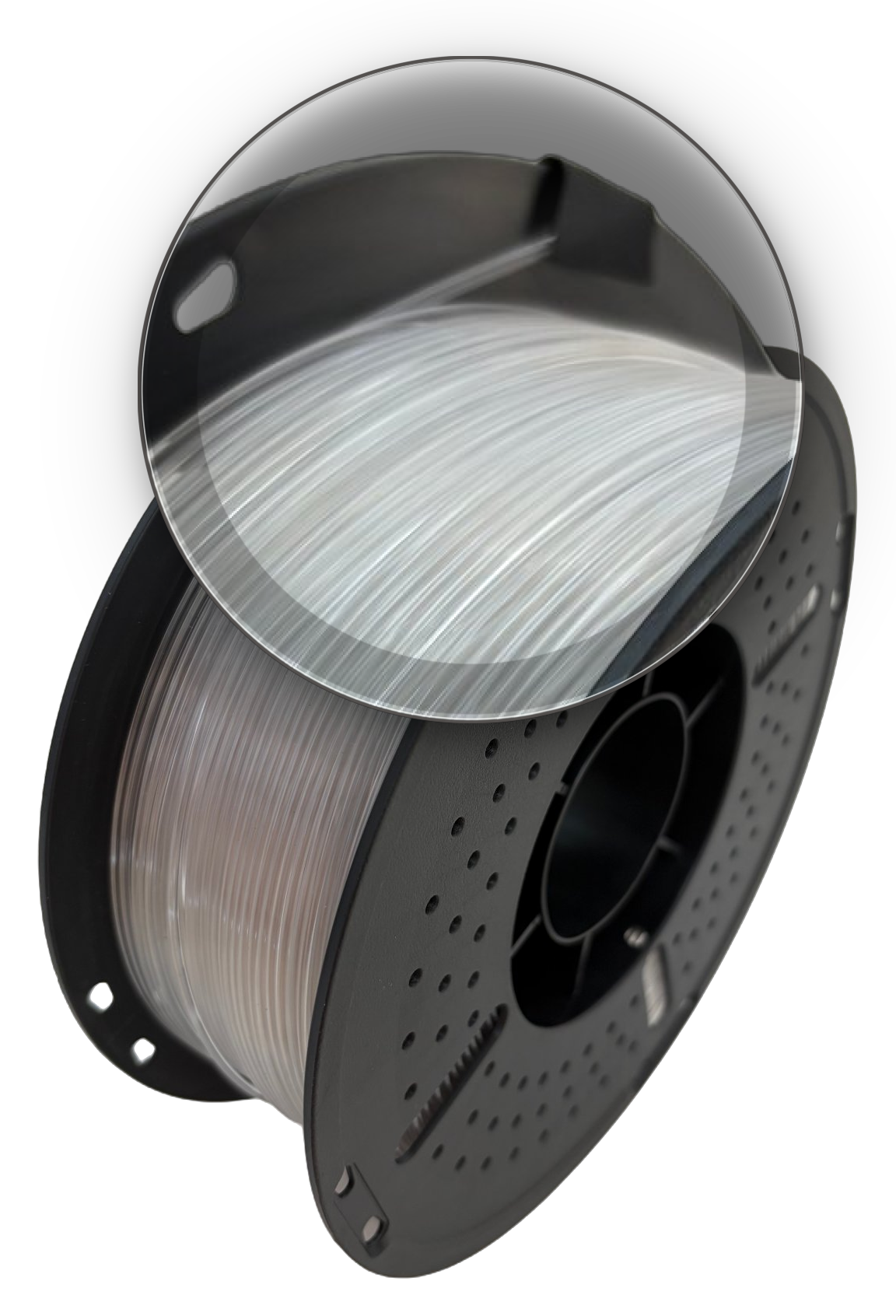
The finished filament is spooled under controlled tension so the spool does not bulge or trap slack layers. The filament end is then fixed to the spool, either with a piece of tape or through a threading hole in the spool core. Automatic winding removes the manual handling at the end of the line, which is where most spool-to-spool variation enters a manual operation. The winding stage runs at up to 200 m/min on the high-speed line and up to 120 m/min on the standard-speed line; the winding guide compares the two fixing methods and the spool formats they require.
How the two current line models differ
Rongcai currently builds two line configurations around this process. The stages are the same; what differs is the documented output and speed:
| Comparison point | RC-50 High-Speed Line | RC-45 Standard-Speed Line |
|---|---|---|
| Extrusion output | ≤ 37 kg/h, adjustable | ≤ 25 kg/h, adjustable |
| Traction and winding speed | Up to 200 m/min | Up to 120 m/min |
| Winding configuration | Tape fixing | Tape fixing or threading hole |
The RC-50 high-speed filament extrusion line and RC-45 standard-speed filament extrusion line product pages carry each line's full documented specification, and the filament extrusion line comparison page sets the two side by side.
What to settle before specifying a line
- Which materials the line has to run. PETG, PLA and PLA+ need different temperature and cooling settings.
- The filament diameter and the tolerance band you must hold on the finished spool.
- The spool type you use, including core diameter and whether the filament end is taped or threaded.
- Whether the output figure you were quoted is extrusion output per hour or finished spools per shift. These are different figures and are not interchangeable.
Questions buyers ask about filament production
Can one line run PETG, PLA and PLA+?
A line is configured around the materials a plant actually runs. Temperature zones, cooling conditions and winding tension are set per material, so the material list belongs in the requirement before the line is specified.
Is the winding station part of the line or a separate machine?
Either. Rongcai supplies extrusion lines with the automatic winding station included, and supplies automatic winding machines as standalone units for plants that already run extrusion and want to automate the end of their existing line.
How is the filament end fixed to the spool?
Two configurations are available. In the tape fixing type the filament end is secured to the spool with tape. In the threading hole type the end is passed through a hole in the spool core, which leaves the spool surface tape-free.
Next step
If you are specifying a filament production machine, send your material, filament diameter, target output and spool specification. The RC-50 and RC-45 pages document the current filament extrusion equipment in full, and we will come back with a configuration to review. Request a quote to start.